
Millions Of Bright Blue "Sailors" Wash Ashore On US West Coast Beaches
Language
Reading Level
Listen to Article
Alignment

Since late March 2026, millions of bright blue creatures have been washing ashore on the US West Coast, from California to Washington. While they look like jellyfish, these organisms are a type of zooplankton called Velella velella. The word comes from the Latin vēlum, meaning "sail."
Nicknamed "by-the-wind sailors," these creatures are named for the small, two-inch (5 cm) translucent sail that rises above their bodies and catches the wind. These ocean dwellers cannot swim on their own. Instead, they drift wherever the wind carries them.
Interestingly, about half of these animals grow with a sail that angles to the left, while the other half have a sail that angles to the right. Because the sails face different directions, the wind spreads them out across the ocean. However, in the spring, wind patterns often shift and blow from west to east. When these winds last for a long time, large groups of the creatures can be pushed onto beaches.
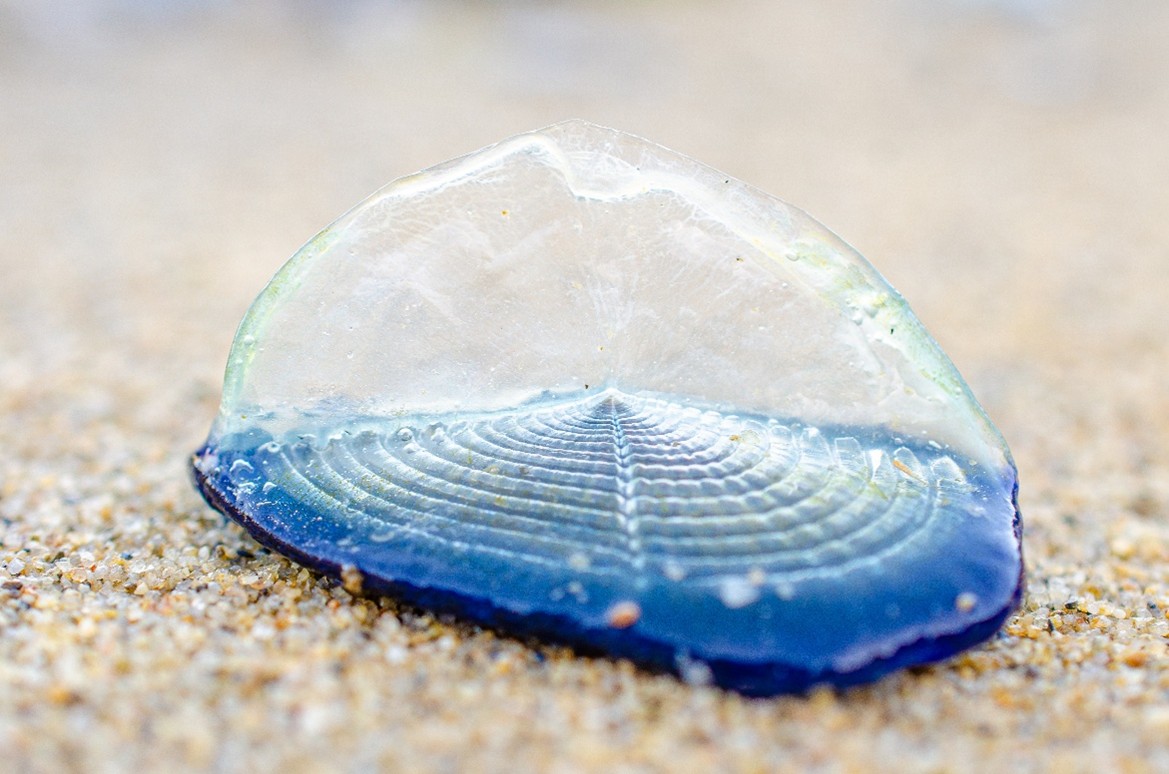
Though they look like a single animal, a "sailor" is actually a floating colony made up of many tiny organisms called zooids. Each zooid has a specific job, such as feeding or protecting the colony. Some zooids have stinging tentacles that help catch small prey.
These creatures wash ashore on West Coast beaches every spring. However, the numbers are much higher than usual this year. Scientists say that the warmer ocean temperatures and a mild winter created ideal conditions for populations to grow. When spring wind patterns shifted, these massive groups were pushed straight onto beaches.
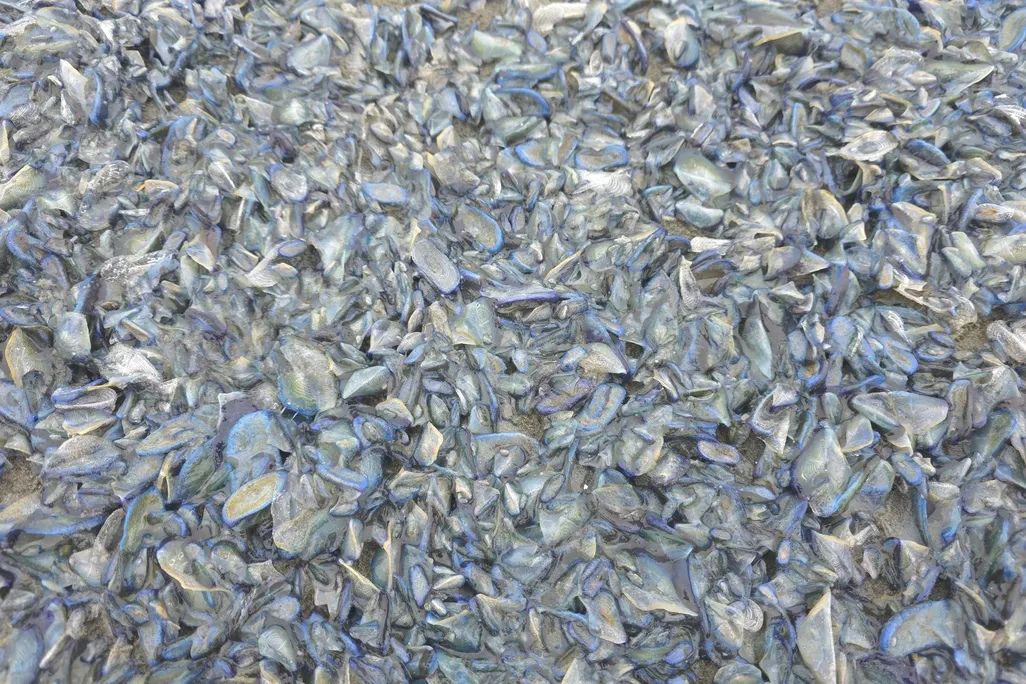
Once on land, the animals quickly dry out under the sun and wind. They eventually become food for shorebirds and small beach organisms, or break down in the sand.
The animals are generally harmless to people. However, pets may get an upset stomach if they eat them. The main impact is the smell. As the creatures pile up and decay, they produce a strong fishy odor that can linger until they fully dry out. Fortunately for US beachgoers, the strandings are expected to decrease in the coming weeks as wind patterns shift again.
Resources: Smithsonianmag.com, kqed.com, NPS.gov

Get the Workbook for this article!
Workbook contains: Article, Reading Comprehension, Critical Thinking Questions, Vocabulary in Context (+ answers), Multiple Choice Quiz (+ answers), Parts of Speech Quiz (+ answers), Vocabulary Game (+ answers)Cite Article
Learn Keywords in this Article

18 Comments
 bobsbananas4 monthsWeird but cool
- bobsbananas4 monthsI like sailing, but it is very expensive so I use a friends
- bobsbananas4 monthsNice
- mysekajijume4 monthscool
 otterlover24 monthsWow! Very cool!
 gabipyfasibe4 monthsThat's so cool!! I would love to look at that in person
 smartreader4 monthsvery cool