
Viking Age Coin Hoard Sets Record In Norway
Language
Reading Level
Listen to Article
Alignment

A farm near Rena in eastern Norway has become the site of the largest hoard of Viking Age coins ever found in the country. The treasure came to light on April 10, 2026, when metal detectorists Rune Sætre and Vegard Sørlie uncovered 19 silver coins in a field. Realizing they may have found something important, the duo contacted county archeologists.
What began with a few dozen coins soon turned into hundreds, and then thousands. Now known as the Mørstad hoard, the find has already yielded 3,150 coins. It surpasses Norway’s previous record. That was set by the Arstad hoard in 1836, which contained 1,489 coins. The archeologists believe even more coins may still be buried at the site.
"This is a truly unique discovery of the kind one might only experience once in an entire career," said archeologist May-Tove Smiseth. "To be present when something like this comes to light is simply a great experience, both professionally and personally."
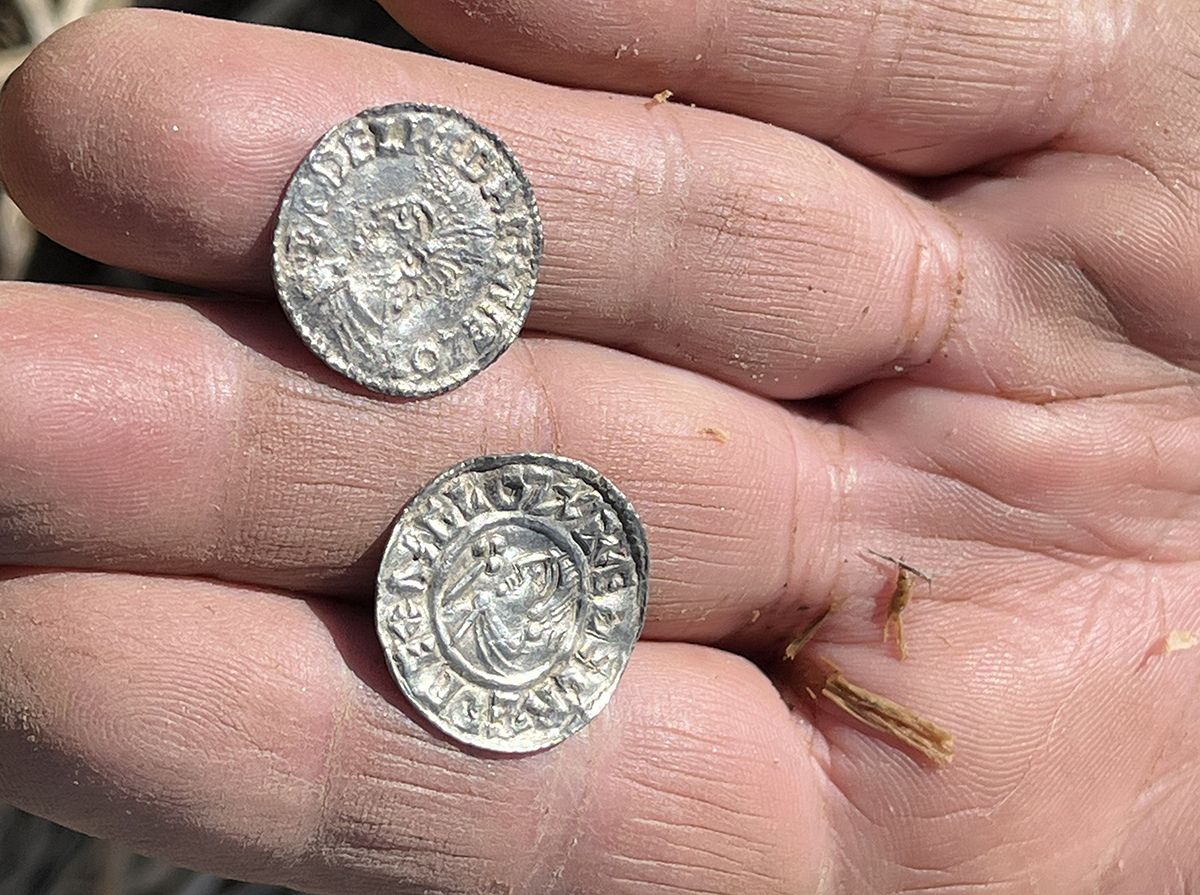
Minted between 980 and 1047 CE, the coins are a mix of local and foreign currency. Details on each coin link them to various rulers across Europe. The ones stamped with the name of King Harald Hardrada provide the best clue to when the hoard may have been buried. The monarch ruled Norway in the mid-11th century. Before his reign, people commonly used silver coins from many different countries. Hardrada replaced these with Norwegian silver pennies. The researchers believe the hoard was buried in the late 1040s, just as this change was beginning.
They are not sure why the coins were buried in this particular field. However, the area was a major center for iron production from the 900s to the late 1200s. This leads them to suspect the silver may have come from the sale of iron to other European countries.
The scientists believe the treasure was most likely stored in a pouch. Over time, the pouch decayed, and farming plows likely scattered the coins across the field. Since people rarely walk the fields, they remained hidden until recently. Despite spending nearly 1,000 years underground, the coins are in remarkable condition. This is probably because there are almost no stones in the soil where the coins were found.
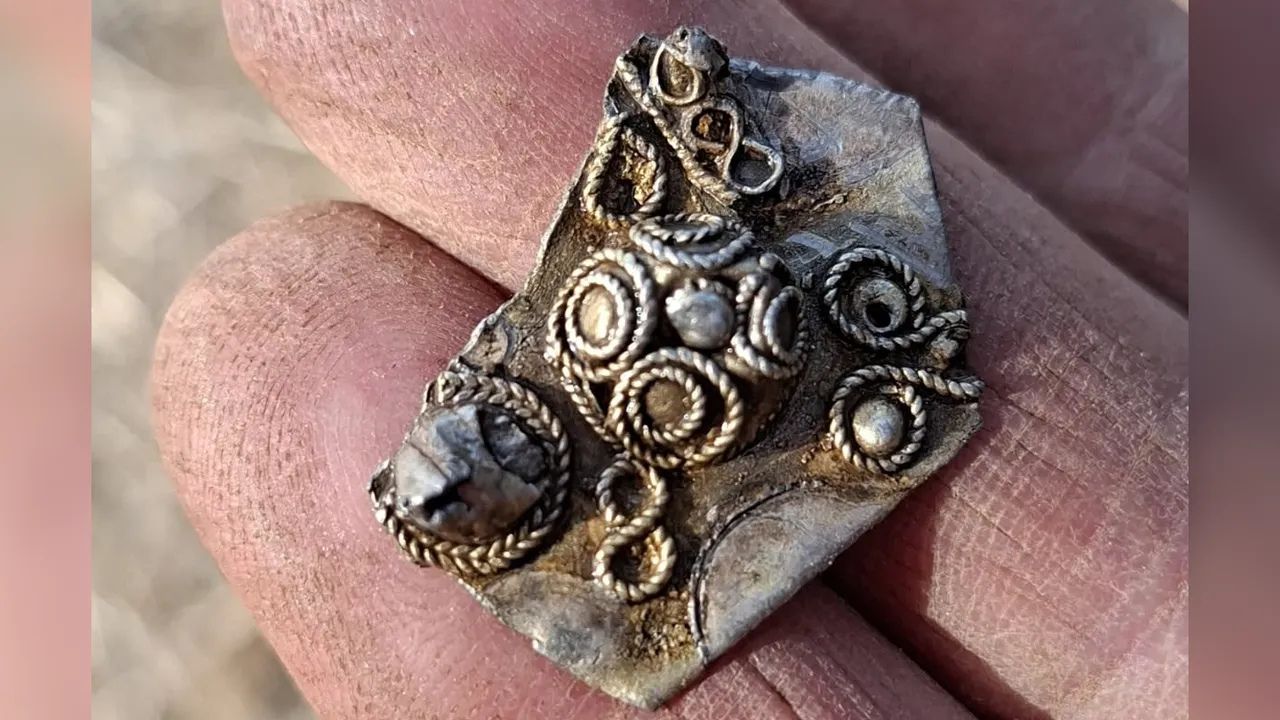
In addition to the coins, the archeologists also found pieces of “hacksilver." These fragments of silver jewelry were often used as currency during the Viking Age.
Excavations are still underway, so the final size of the Mørstad hoard remains unknown. The coins recovered so far will be cleaned and cataloged at the Museum of Cultural History in Oslo. By studying the collection, researchers hope to learn more about trade, wealth, and the economy of the Viking Age in Norway.
Resources: Smithsonianmag.com, popularmechanics.com, Livescience.com
Get the Workbook for this article!
Workbook contains: Article, Reading Comprehension, Critical Thinking Questions, Vocabulary in Context (+ answers), Multiple Choice Quiz (+ answers), Parts of Speech Quiz (+ answers), Vocabulary Game (+ answers)Cite Article
Learn Keywords in this Article

26 Comments
 ellievanilla11 daysI have a large coin collection with Korean coins, Canadian coins, and discontinued pennies!
 soupbananaabout 2 monthsI have a Canadian penny and a Canadian nickel
 ghostloloemoji4 monthsI have a Canadian penny with queen Elizabeth and I have a Korean coin etc.
 spider-man29254 monthsSame
 wani_tsunami4 monthsWow! This is so cool! I have coins from, Europe, Ethiopia, Canada, and the USA, but I could NEVER get all of those old Viking coins! Congrats
- ellievanilla11 daysomg girl I come from Ethiopia! I also have a coin from there!
- vavilugyjysi4 monthscool I have a silver doller
 freerangekid4 monthsI have a coin from Iceland! ❤
 gabipyfasibe4 monthsThat is so cool!! I have a European coin.
- kurujopiwofi4 monthsI collect cards not coins
 ilovehenrydsaf14 monthscool