
How South Korea Is Leading The Way In Food Waste Recycling
Language
Reading Level
Listen to Article
Alignment

Food waste is a major contributor to greenhouse gas emissions. As food decomposes in landfills, it releases methane and carbon dioxide. These potent gases accelerate global warming and climate change. Experts estimate that nearly a third of the world's food, about 1.3 billion tons, is wasted annually. This waste generates a staggering 3.3 billion tons of greenhouse gases each year. It accounts for 8 to 10 percent of global emissions.
Most countries struggle with food waste management. However, South Korea stands out with its innovative composting system. Called Jongyangje, it requires residents to separate their food waste. Where available, they can dispose of it in specialized electronic bins that weigh the waste and charge them based on the amount thrown.
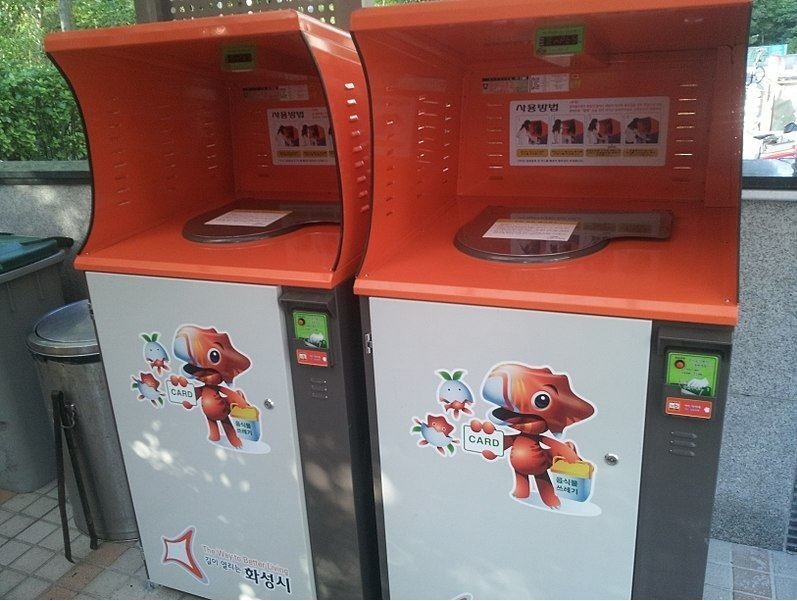
Those without access to electronic waste bins must purchase special compost bags. They range in price from 10 cents to $2, depending on their size. These bags can then be thrown into specially marked bins. Residents who mix food waste with regular trash risk fines of up to $800.
The collected food waste is taken to composting facilities. Some of it is converted into biogas, a type of renewable energy used to power homes. The rest is turned into fertilizer or livestock feed for chickens and pigs.
Jongyangje does have its share of challenges. Despite citizen contributions, the Korean government incurs an annual operating cost of over $600 million. Additionally, not all food waste is recyclable. Bones from animals like chickens and shellfish shells can damage the recycling equipment. Moreover, some farmers hesitate to use composted waste as fertilizer due to its high sodium content, which limits its usability.
However, the 20-year-old system has yielded remarkable results. The country recycles an impressive 98 percent of its 5.5 million tons of annual food waste. This far surpasses the US, which composts only 5 percent of its estimated 60 million tons of annual food waste. This outstanding performance demonstrates the effectiveness of government-citizen cooperation in managing food waste.
Resources: Washingtonpost.com, theguardian.com, Envacgroup.com

Get the Workbook for this article!
Workbook contains: Article, Reading Comprehension, Critical Thinking Questions, Vocabulary in Context (+ answers), Multiple Choice Quiz (+ answers), Parts of Speech Quiz (+ answers), Vocabulary Game (+ answers)Cite Article
Learn Keywords in this Article

20 Comments
- taronobigafoover 1 yearwow south korea is amazing
- taronobigafoover 1 yeargreat
 godsfollowerover 1 yearthe planet is getting warmer and animals are dying out this is an important step for a better cleaner planet
 ryanwwover 1 yearcool
 seoul_girlieover 1 yearso glad I'm from here :)
 jtengalmost 2 yearsamazing! great for the environment too! so good!
 rosie_posiealmost 2 yearsamazing! great for the environment too!
 elaynakisealmost 2 yearsit is the best thing ever
 letacabo-172388089710almost 2 yearsthat so smart to do!!!!!!!!!!!!11
 deborahchienalmost 2 yearsThis is so clever!