
A Spectacular "Ring Of Fire" Eclipse Will Be Visible From The Americas On October 14th
Language
Reading Level
Listen to Article
Alignment

Fall stargazing is about to get even more exciting. On October 14, 2023, the Moon will partially block the Sun, turning it into a stunning "ring of fire." The annular — Latin for ring-shaped — solar eclipse will be visible within a roughly 125-mile-wide (201 km) path from Oregon to Texas. The last time the US witnessed an annular eclipse was on May 20, 2012. The next time will not be until July 2084!
The science
An annular eclipse is similar to a total eclipse. The Moon, Earth, and Sun are aligned so that the Moon moves directly in front of the Sun as viewed from Earth. However, since the Moon is at its farthest distance from Earth, it appears smaller and does not entirely block out the light from the Sun. This results in an incredible "ring of fire" around the Moon.
The annular solar eclipse's path
In the US, the annular solar eclipse will begin in Oregon at 9:13 AM PDT and head downward across Nevada, Utah, and New Mexico. It will also encompass parts of Idaho, California, Arizona, and Colorado, before exiting into the Gulf of Mexico at Corpus Christi, Texas, at 12:03 AM CDT (10:03 AM PDT).
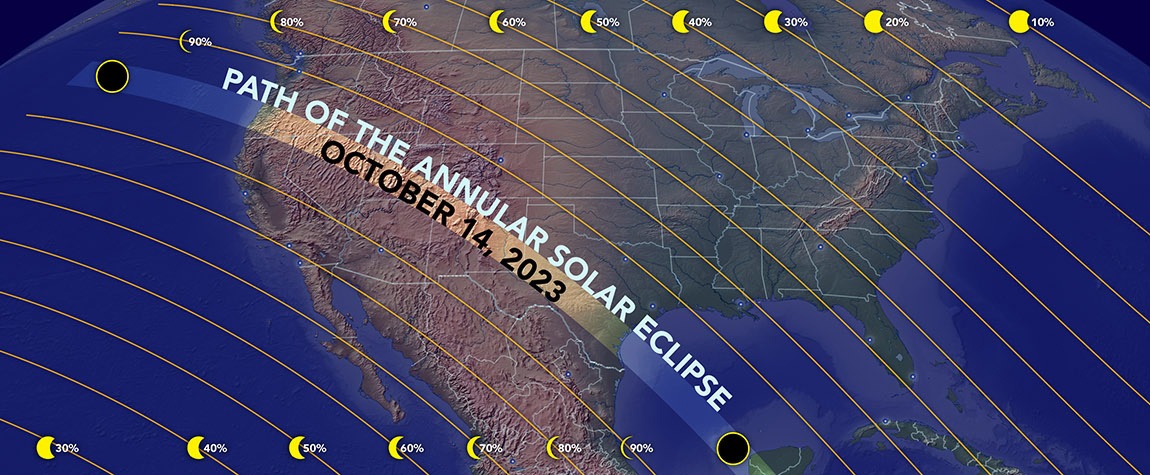
From there, the eclipse will cross over Mexico and Central America, before ending over the Atlantic Ocean. Those just outside its narrow path will be able to see a partial eclipse. The Moon will appear to have taken a big chunk (65 percent) out of the Sun.
The entire eclipse — from when the Moon starts to block the Sun until it is back to normal — will last about 2 1/2 to three hours in any given area. The "ring of fire" portion will be visible for three to five minutes, depending on location.
How to view the eclipse
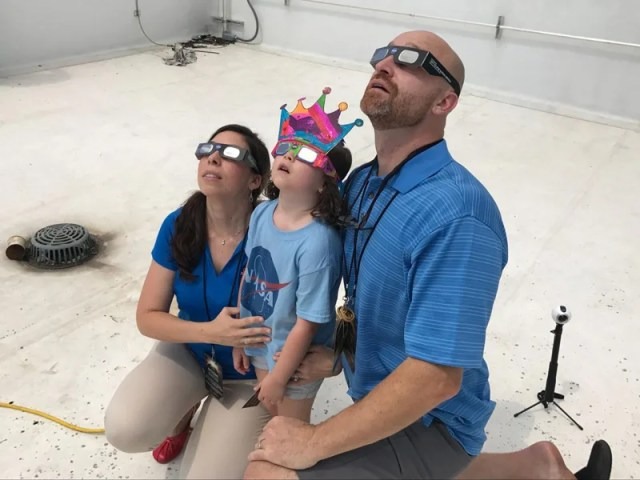
If you are among the fortunate ones in the eclipse's path, seek out a clear viewing area. You can go to a beach or to the top of a tall building. Also, always use solar eclipse glasses to prevent eye damage. The special glasses are available for free at libraries across the US. If you cannot get a pair, make a pinhole camera and project the Sun's disk onto paper or another surface.
Eclipses come in pairs!
Those unable to see the annular or partial eclipse will be pleased to know that eclipses come in pairs. A solar eclipse is usually followed by a lunar eclipse and vice versa. The celestial events usually occur within two weeks of each other during an "eclipse season."
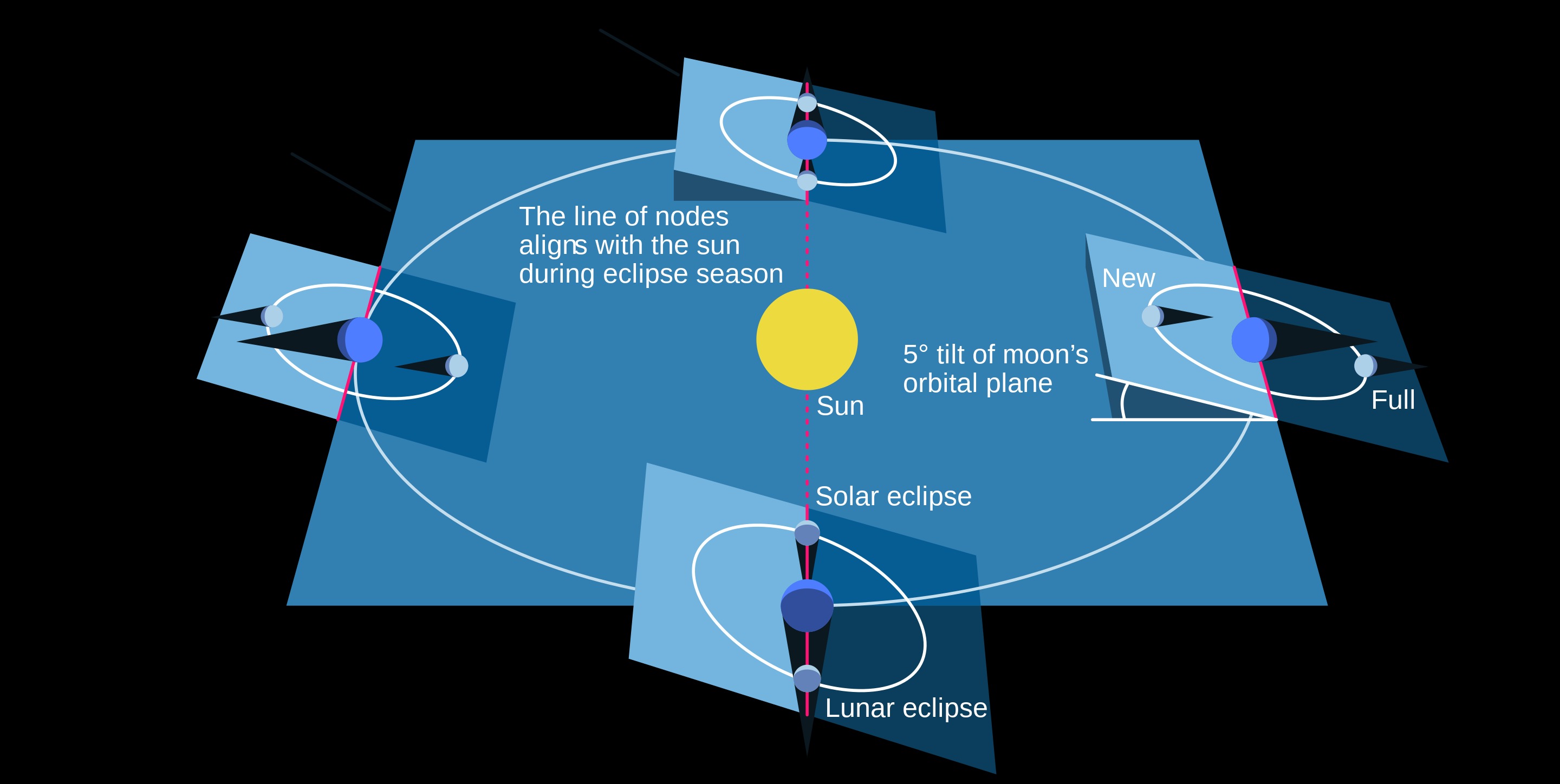
This means a partial lunar eclipse will occur on October 28, 2023. Unlike solar eclipses, lunar eclipses can be seen wherever the Moon is above the horizon. This month, that will include Asia, Russia, Africa, the Americas, Europe, Antarctica, and Oceania.
If that is not exciting enough, on April 8, 2024, the Moon will cover the Sun's entire disk for a few minutes. The spectacular total solar eclipse will be visible across Mexico, the central United States, and eastern Canada.
Resources: Space.com, NASA.com

Get the Workbook for this article!
Workbook contains: Article, Reading Comprehension, Critical Thinking Questions, Vocabulary in Context (+ answers), Multiple Choice Quiz (+ answers), Parts of Speech Quiz (+ answers), Vocabulary Game (+ answers)Cite Article
Learn Keywords in this Article

101 Comments
 nolanckearnsalmost 3 yearsDogo News is cool :)
 sucundysalmost 3 yearsholey moley what a great article for and the fam to enjoy that sucks clouds were in the way but wowzers very cool sun!!!!!!!!!!!!!!
 bookluver123almost 3 yearshonestly. the clouds were anoying
 i_love_donkeyalmost 3 yearsI would not have got to see it if it wasn't for DOGOnews. Thank you DOGOnews. :)
- thecoolestguyalmost 3 yearsWowzers this article was very cool!!!!! I really did enjoy the part where they talked about how to view it !! I also enjoyed it when they explained the science and all of that. It was by far the best and most cool article I have EVER seen!!!!!
- thecoolestguyalmost 3 yearsWowzers this article was very cool!!!!! I really did enjoy the part where they talked about how to view it !! I also enjoyed it when they explained the science and all of that. It was by far the best and most cool article I have EVER seen!!!!!
 smontoya27almost 3 yearsIt was so cool
 reigenaratakaalmost 3 yearsi wish I could have seen it
 damoneyalmost 3 yearsI saw the eclipse. It was super cool!
- damoneyalmost 3 yearsI saw the eclipse. it was really cool!
 oreocookie64almost 3 yearsI couldn't see it cuz im on the east coast :(