
Antarctic Ice Core Could Reveal How Fast Sea Levels May Rise
Language
Reading Level
Listen to Article
Alignment

An international team of scientists has successfully retrieved the longest sediment core from beneath an Antarctic ice sheet. The 748-foot-long (228 m) sample of rock and mud offers a geological record spanning roughly 23 million years. Researchers hope these ancient layers will reveal how the region responded to past warming periods. This data could help improve predictions about future climate change.
Obtaining the sample was no easy task. The 29-person team of scientists, engineers, and polar specialists traveled more than 430 miles (700 km) from the nearest Antarctic base. Living in tents on the snow for ten weeks, they worked around the clock in shifts.
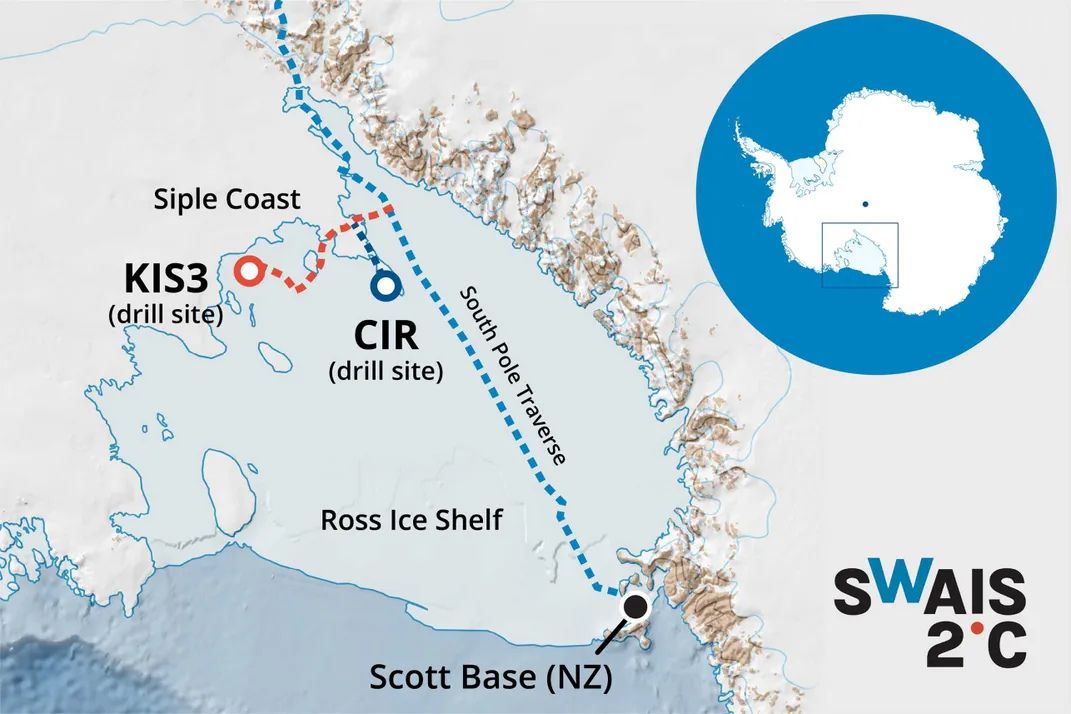
The researchers followed a two-step process to reach the seafloor. First, they used a high-powered hot-water hose to melt a clean pathway straight down through 1,716 feet (523 m) of ice. Then, they drove a pipe deep into the muddy seafloor to scoop out the core sample.
Early tests on the sample revealed fossilized algae and shell fragments from ancient sea life. Both these organisms needed sunlight to survive. This suggests the area was once an open ocean, free of the ice sheet that covers it today. The details of the record-breaking feat and early findings were released on February 18, 2026.
What's next and why this project matters
The sample is now in New Zealand for further study. Researchers will look closely at the layers. They want to find out how many times the region shifted between solid ice and open water. They also hope to learn how fast the ice sheet disappeared in the past. Another goal is to understand what global temperatures caused those changes.
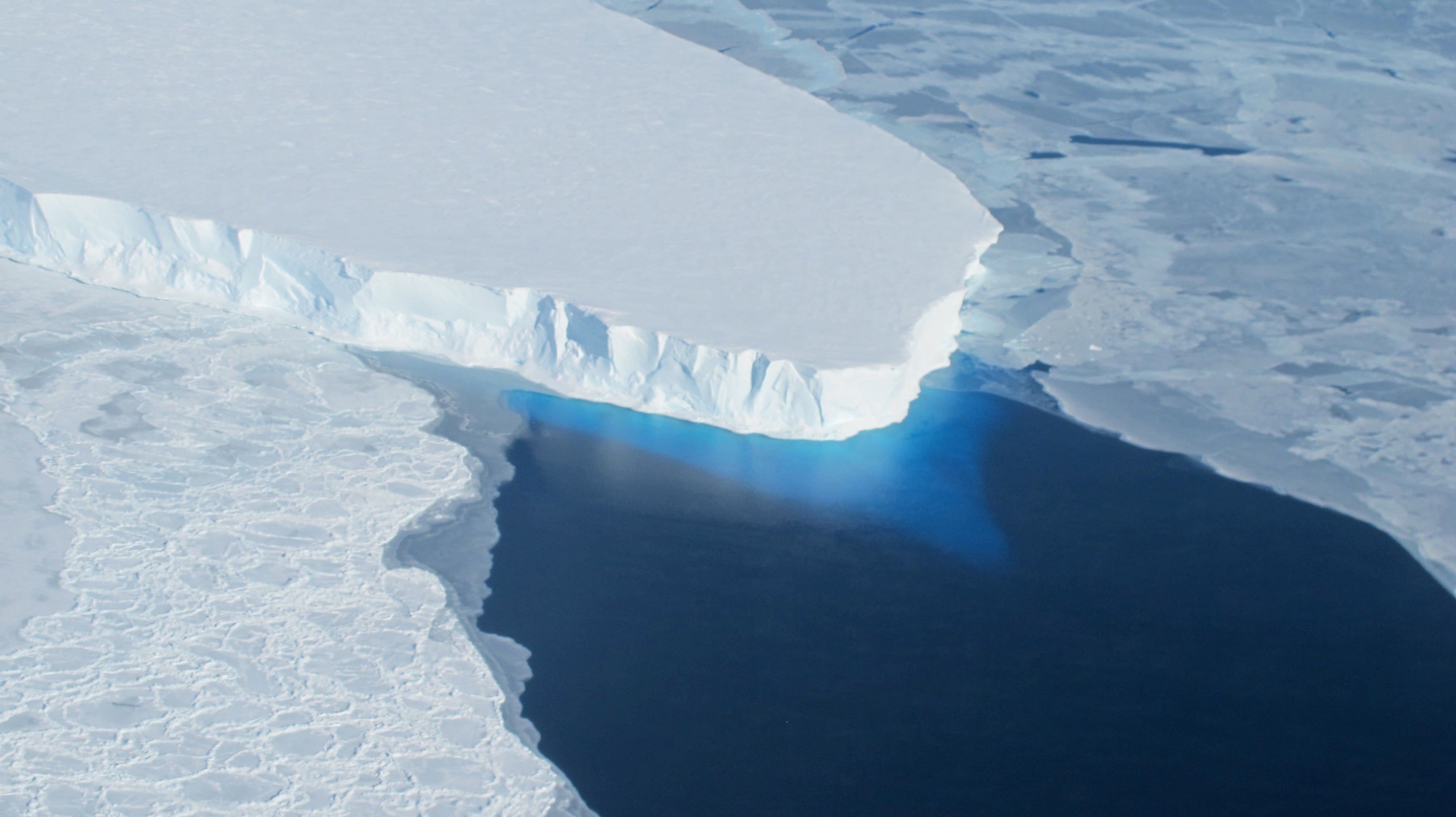
This information is particularly important because the West Antarctic Ice Sheet is melting rapidly. If it melts completely, global sea levels could rise by 13 to 16 feet (4 to 5 m). This would reshape coastlines around the world. The scientists hope their findings will help them better predict the extent of future sea-level rise. This could give communities more time to prepare and adapt.
Resources: Swais2c.aq, Smithsonianmag.com, IFLscience.com

Get the Workbook for this article!
Workbook contains: Article, Reading Comprehension, Critical Thinking Questions, Vocabulary in Context (+ answers), Multiple Choice Quiz (+ answers), Parts of Speech Quiz (+ answers), Vocabulary Game (+ answers)Cite Article
Learn Keywords in this Article

13 Comments
 jyzyvomurysa8 daysmorden science is so cool it is cool to see all the thi nngs they reasearch
 team_bananaa29 dayscool!
 soupbananaabout 2 monthsI would never do what the scientists did sounds too risky yknow
 isavyninja673 monthsWe can learn about what's under Antarctica. This will improve our knowledge of Antarctica.
 fyigodisgood4 monthsNice☺️
 thejackguy4 monthsThey made a hole in the middle of the ice…ain’t that gonna melt faster?
 pusheen544 monthsWow
 ghostloloemoji4 monthsKinda looks risky 😬
 pugezowonujo4 monthsthis is interesting we can learn from 23 million yr ago
 cimubekitiji4 monthscool