
Robot Inspired By Diving Birds Can Fly And Swim
Language
Reading Level
Listen to Article
Alignment
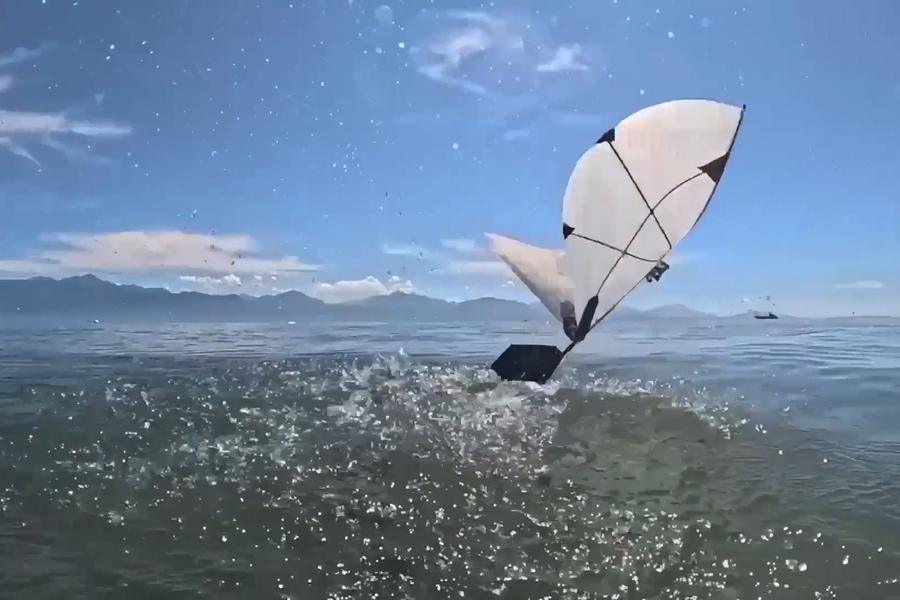
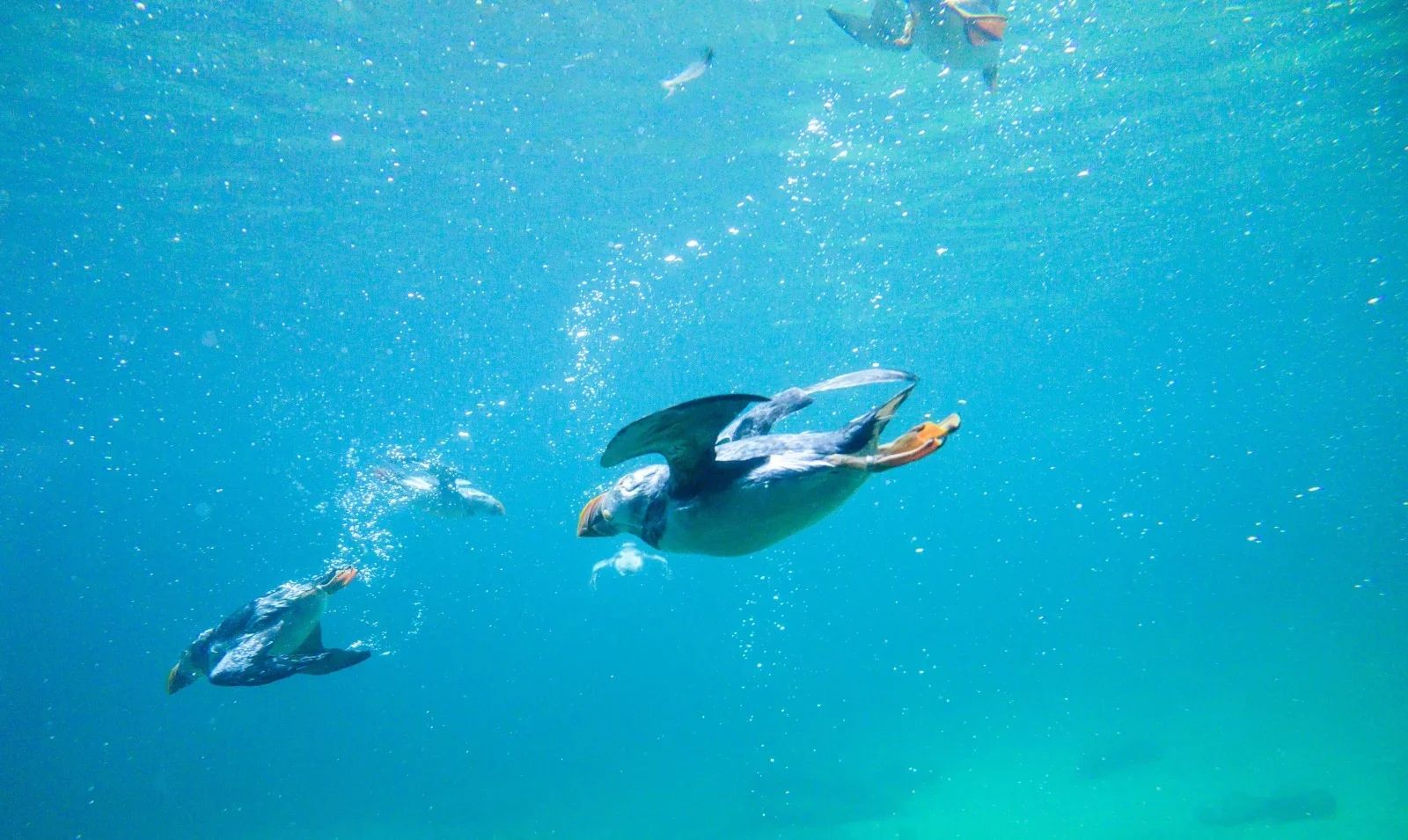
Diving birds, such as Atlantic puffins, don't use their wings just for flying. They also use them to swim underwater and chase prey. Inspired by these birds, a team of scientists led by Raphael Zufferey of MIT has created the FAAV (flapping-wing aerial-aquatic vehicle). This lightweight robot uses its wings to seamlessly transition between flying and swimming.
Building a machine that can move through both air and water was no easy task. Water is about 1,000 times denser than air, so moving through it requires much more force. Birds can fold their wings to help them swim, but adding a folding mechanism would make a small robot more complicated. To solve this, the team gave the robot flexible wings that bend up to 90 degrees when pushing through water.
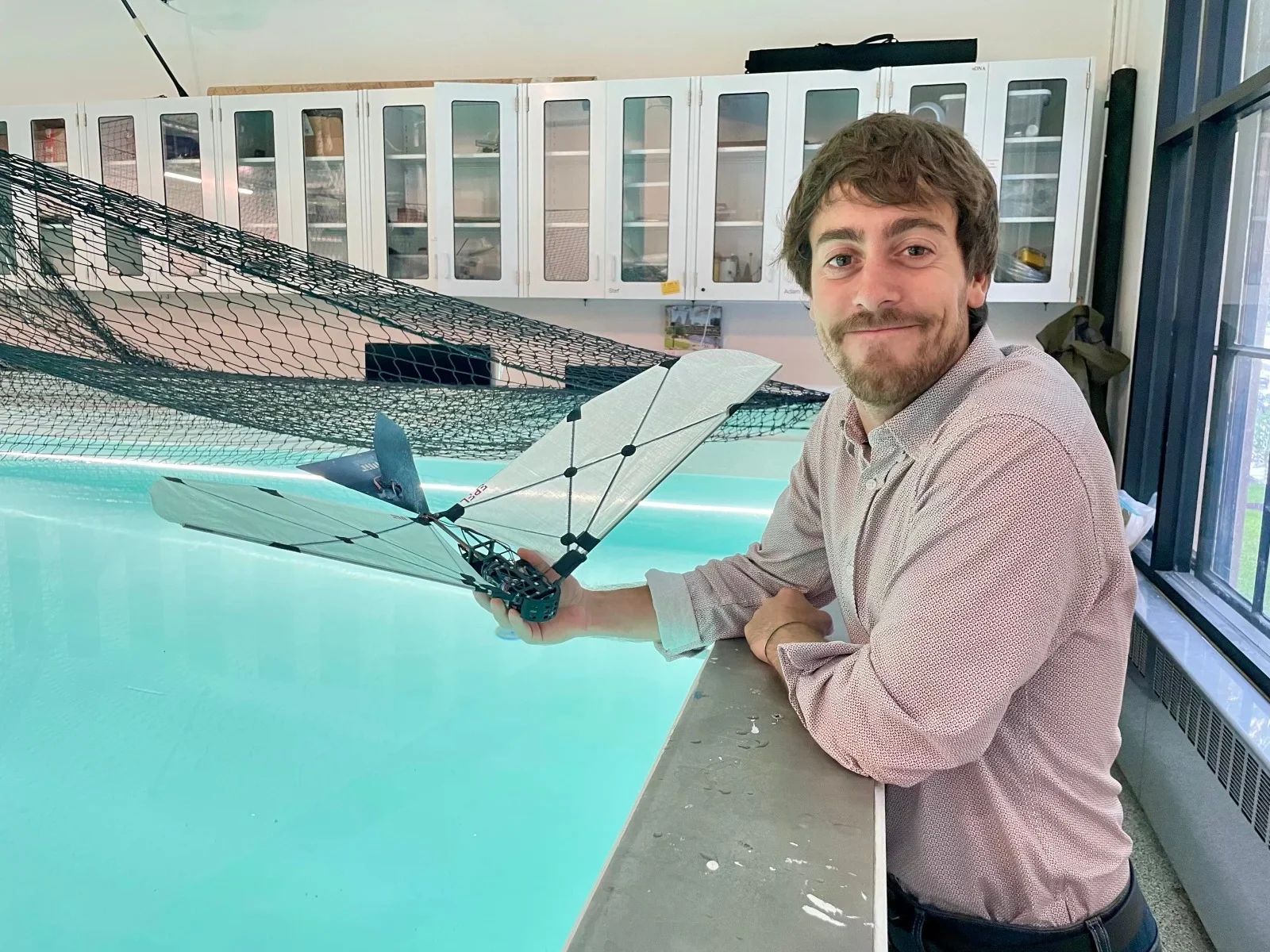
Next, the scientists had to determine the optimal wing size. They tested three different sizes and found that medium-sized wings offered a good balance. They bent enough to work underwater while still providing the lift needed for flight. To help them shed water after swimming, the wings were coated with tiny, water-repelling particles. This kept them light enough for takeoff.
In tests, the robot swam underwater at nearly 3 feet (1 m) per second and flew at about 20 feet (6 m) per second. These speeds were similar to those of real diving birds. Also, unlike most diving birds, the robot did not need to paddle its feet to get airborne. It rose out of the water and took off using only its wings.
"If you look at birds, most birds need to paddle at the surface to take off. And the question was, do we need the same for robots? And it turns out we don't," says Zufferey.
The team published its findings in the journal Science on July 9, 2026. The researchers are now working to improve the wings so they can turn as well as flap up and down. They also plan to test the robot in choppy water and windy conditions. Once ready, the robot could help scientists study the ocean more efficiently.
"One of the major challenges in ocean science is collecting data both frequently and across many locations, which is something this robot could do in the future," Zufferey says. "You could send this out not just every week, but every hour. It could fly out at high speeds, dive in, fly back, deliver its data, and go back out, multiple times."
Resources: MIT.edu, Smithsonianmag.com, CNN.com

Get the Workbook for this article!
Workbook contains: Article, Reading Comprehension, Critical Thinking Questions, Vocabulary in Context (+ answers), Multiple Choice Quiz (+ answers), Parts of Speech Quiz (+ answers), Vocabulary Game (+ answers)Cite Article
Learn Keywords in this Article

43 Comments
- harrypoterrocks4 daysTHAT IS LOW KEY SICK!!!!
 alotito6 daysThat is really cool
 buttercutter6 daysWow this is an amazing thing. It also os scary though. What if the china robots that already can hold firearms will be able to swim and fly.
 kristis_korner7 daysAMAZINGGG
- kristis_korner10 daysI kinda want one. heheh
- kavthegreat11 daysI guess I can’t
- jesusismysavior12 daysMaybe planes will do this on day
 truitt_prenda11 daysMore or less they did once Idk why we abandoned the idea of sea planes
 squit13 daysImagine swimming and you find this thing staring at you in the water
- kristis_korner10 dayslol I would be so scared, but its rly coool
 cetyryfupeka14 daysI want one!
 iloveducks12314 daysso tufffff!!!!1
 cuforicuhali14 dayswow