Kids Books - Classics
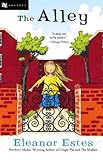
The Alley
By Eleanor Estes

Connie Ives, a young girl who live in the Alley. You would often find her, swinging in her yard, either swinging solo or with a friends. She also often hang out with her friends; Billy Maloon, Judy Fabadessa, Laura Fabadessa, etc. There's another girl, Katy Starr who is well-known for her "Katy's Laws" in the Alley among the children. Things just going on until suddenly one day, Connie was with her mother, out doing the errands, when the Ives' home got burglarized. Then, there's a mystery uprising all through the Alley. Will Connie Ives with Billy Maloon solve this mystery in the Alley of the burglars? Read on and find out of what will happen in this book! - Happy Reading!
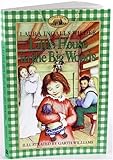
Little House in the Big Woods Book and Charm (Little House the Laura Years)
By Laura Ingalls Wilder

This is SUCH a good book! It's about a little girl named Laura who lives in a log cabin in the middle of the woods. It's interesting to see what they did for fun and learn about their lives. Laura has an older sister, Mary, a younger sister, baby carrie, they call thier parents Ma and Pa. Pa hunts and Ma cooks and sews. Mary and Laura play with their corncob dolls in the attic. Laura, the little girl in the story, wrote this book so it is a true story! Please read this book!

Julie of the Wolves: Treasury (Julie of the Wolves, Julie, and Julie's Wolf Pack)
By Jean Craighead George
Julie Edwards Miyax who are also just known as just Miyax. Her father, Kapugen, who disappeared several years ago before the post of the book. Her mother died when Miyax were barely even 5 years old. In the book, the father Kapugen had told his daughter was that when she become 13, she would marry Kapugen's friend, Naka's son, Daniel who are also 13. This had made her to run away and live with the pack of the wolves but this had only happened temporarily. Sometimes you can see the letters between Miyax and her pen-pal and friend from San Francisco; Amy Goodwin. This book have some tragic and heart-breaking parts along with heart-feeling parts. - Happy Reading!

Detectives in Togas
By Henry Winterfeld
When my mother suggested I read Detectives in Togas, I wasn't very enthusiastic. I didn't like the cover of the book and why would I want to read a story about schoolboys living in Ancient Rome? In fact, Detectives in Togas is a whodunit which involves seven boys who live in Rome: Caius, Mucius, Rufus, Antonius, Publius, Julius, and Flavius. They all go to the same school and are all good friends. Their teacher is a Greek called Xanthos and he is very strict. One day, Caius starts annoying Rufus by poking him in the back while he's trying to work. Rufus decides to get his revenge and writes "Caius is a dumbbell" on a wax tablet and hangs it on the wall of the classroom. Caius is so angry about this he shouts out that Rufus' father is a coward! The two boys start to fight each other. Xanthos is furious to see fighting in his school and pulls them apart, but he can't understand how it all started. Suddenly, he spots Rufus' wax tablet and what's written on it. He says that that Rufus is a disgrace and that he should go home immediately and not return to the school ever again. Rufus is very upset. He packs up his school things and leaves the classroom, but he doesn't go home. From his desk, Mucius can see him sitting on a barrel by the side of the road. He seems to be waiting for something or someone. Then suddenly, Rufus jumps up and runs off, but not in the direction of his house. The next morning, Rufus and Caius are not at school. More mysterious, Xanthos is nowhere to be seen! The five boys start to search everywhere. Where could he be? And where is Rufus' wax tablet? And who has written "Caius is a dumbbell" on the temple wall in large red writing? Could it really be Rufus? If you enjoy mystery stories, you'll love Detectives in Togas, especially piecing all the clues together. You also end up learning loads of interesting information about Ancient Rome as you go along - and even a bit of Latin!

Great Expectations (Great Illustrated Classics (Abdo))
By Charles Dickens

Pip, a young orphan living with his older sister and her husband, longs for a better life, one that would make him eligible for marrying the woman of his dreams, Estella. After he is finally given a chance to become a true gentleman, Pip learns important lessons regarding the influence of money and how it can change a person, for the better or for the worse….Great Expectations begins with seven-year-old Pip, a young orphan boy living with his ill-tempered sister and her kind husband, Joe. An aspiring blacksmith apprentice under Joe, Pip yearns for the moment when he and Joe can work in the forge together. But his dreams are quickly erased upon being introduced to Miss Havisham. An eccentric individual who hopes for nothing more than ruining the lives of men as her life was ruined by a man, Miss Havisham invites Pip to her home. Curiously enough, all Miss Havisham wants to watch Pip play with Miss Havisham’s beautiful adopted daughter, Estella. Estella, despite her beauty and charisma, is spoiled and crass much like Miss Havisham. However, despite her poor treatment toward Pip and her undeniable dislike for him, Pip is immediately taken by her beauty and dreams of marrying her. Unfortunately for Pip, he knows that such dreams are far out of reach unless his circumstances change and he becomes an honorable man. An opportunity comes when Mr. Jagger, a lawyer from London, reports to Pip that an anonymous benefactor has given him a large sum of money and hopes for him to create a good life for himself in London. The only conditions are that, one, Pip always is referred to as “Pip”, and two, the identity of the benefactor must remain a secret. Agreeing to the terms, Pip sets out to London for a better life. In London, Pip immediately adapts nicely into his new living conditions. Pip enjoys the pleasures of wealth and the respect and honor that comes along with the large allowance. Unfortunately, Pip, becoming too used to his life and forgetting to live within his means, falls into exponential debt. His wild and expensive life seems to be unraveling as quickly as it began until the arrival of Abel Magwitch. Magwitch, an old convict that once forced Pip to steal as a young boy, is Pip’s generous benefactor. It soon becomes clear, nevertheless, that Magwitch is in severe trouble and must leave London before authorities are notified. Now, Pip must think of a plan that will allow for Magwitch to escape while still keeping Pip’s name clear of any association with the former convict. Along with the predicament involving Magwitch, Pip’s notion that all he had to do to get Estella’s affection was to become a gentleman, is quickly foiled upon meeting Estella once again in London. Engaged to be married and looking at Pip as no more than a chauffeur, Pip realizes that any chance he might have had with Estella have vanished. The book concludes with Estella and Pip meeting once again after about eleven years. Estella, humbled but still exuding beauty and grace, admits to Pip that she threw away his love for her because of her ignorance and pride. The book ends emotionally with the two walking with the shadow of Miss Havisham behind them. Through this story, applications for our lives include the importance of keeping money in check but not an idol and the importance of not thinking ourselves better than others because of our fortunate circumstances. Pip realizes that “Miss Havisham and Estella, their riches and refinement, has changed me permanently!”. The importance of money and the consequences of making it an item for worship is clearly illustrated in this book and warnings are pronounced evidently. Not thinking ourselves higher than other people is also a clear lesson from this story. Estella, seemingly well-to-do and beautiful, had a repulsive attitude towards those she deemed below her. However, at the end of the book, the reader is able to see that, through the challenges of life, Estella had a change in perspective and was humbled. She stated towards the end of the book that “My suffering all these years has come to be a stronger teacher to me than all other teachers. I have been bent and broken, but I hope into a better shape." Her honest and moving words are perhaps the hallmark of this entire book. With its many twists and turns, I would strongly encourage one to not write off this book as an old, non-relevant to modern times story, as I did before I read it. Despite being written in the 1860s, however, Charles Dickens masterfully captures a timeless issue in today’s society: money. Although perhaps not as exciting as a twenty-first century novel, this book has stood the test of time and after reading it, it will become clear why. With that being said, Great Expectations is most definitely a must read because of its important lessons and creative characters. Happy reading!

Anne of Green Gables
By L. M. Montgomery

2 stars-- I tried. I actually tried to like this poorly written, overrated "classic", but to be honest...I HATED EVERY PAGE. Anne of Green Gables made me want to scream and punch a pillow. By page 100, I was half-dead with boredom, and my eyes hurt from rolling them so much. Okay, I know what you're probably thinking: "But this book is a CLASSIC. Why don't YOU try to write a novel before criticizing the work of L.M. Montgomery?" Well, guess what? I'm allowed to have an opinion! But what exactly made me hate Anne of Green Gables so much? THE CHARACTERS. I strongly disliked EVERY. SINGLE. CHARACTER in this book, especially Anne Shirley. Anne is too talkative, dumb, annoying, superficial, insensitive...the list goes on. She has a "big imagination", which is just her excuse for acting like someone who drinks too much caffeine for breakfast. And did I mention her really, really short temper? I mean, she held a grudge for YEARS on this guy in her class named Gilbert, because he--gasp!--called her "carrots", making fun of her red hair. OMG, he called her "carrots"? That's SUCH a horrible thing to say! It's DEFINITELY a good reason to stop talking to him, even though he repeatedly apologized and even SAVED ANNE FROM DROWNING ONE TIME! Yeah, Gilbert's the bad guy here. (In case you couldn't tell, I'm being very sarcastic). Also, Anne is super insensitive. She always impulsively says and does whatever she wants to say and do, without realizing that she might be hurting people's feelings. She has a big imagination...and a big mouth. The other characters in the book were not much better than Anne. Her best friend Diana doesn't seem to have a personality--she's one of those characters who exists solely because she's pretty. She just does whatever Anne does. Anne's friend Ruby is superficial and boy-crazy, and her other friend Jane is boring. Gilbert's alright, I guess--but his crush on Anne is SO OBVIOUS. Marilla and Mathew, Anne's adoptive parents, are the only characters I don't completely hate, as they undergo some character development. I might have actually liked Anne of Green Gables if it weren't for the characters. The world-building and plot are okay, and storyline is interesting. This would've been a good book if the characters were more relatable, realistic, and developed. I know I'm expressing an unpopular opinion, but this is how I truly feel about Anne of Green Gables.
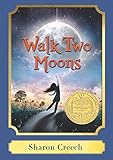
Walk Two Moons
By Sharon Creech

First, I should introduce the main character, Salamanca Tree Hiddle, better known as Sal, who has the pack her bags and move to Ohio. She leaves her farm in Bybanks, a fictional small town in Kentucky, and travels to Euclid, which not only is a real place, it is the birthplace of the author. But that was a year ago, and in the present, she is in the car with her two grandparents, who are driving her all the way to Lewiston, Idaho, where her mother is. As they're driving, Sal tells a story that happened to her when she first moved to Euclid. It concerns a strange girl named Phoebe Winterbottom, a mysterious young man, and has quite a few surprising twists... As the book unfolds, more and more details about Sal's past are revealed. This book alternates, with Sal revealing more of her story, and strange things happening to her grandparents. All in all, there were a few key details that could either make you enjoy it or ruin it for you. There's the whole thing about having a story behind another story, as Sal puts it, and the whole other thing about some things being unclear and potentially confusing until later. Then there are the two weird grandparents and Sal, Gramps, and Gram's weird rural way of speaking. For me, the whole idea of having two stories worked out in the end, and I liked the eccentric habits of her grandparents, but I could see why some people would be a little confused. Additionally, the idea of traveling across the US and going to all these small towns was cool, too. I enjoyed how it had a fair amount of humor, and was mostly very engaging and drew me in from the first chapter. If you like somewhat old-fashioned realistic fiction, like some of Kate DiCamillo's stories, you'll like it too. You might even have a "gol-dang" time, as Gramps puts it.
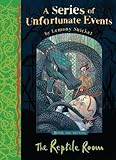
The Reptile Room (A Series of Unfortunate Events)
By Lemony Snicket

The Baudelaires are still shaken from their experience with Count Olaf, but they are now sent to their Uncle Montgomery Montgomery (No that was not a mistake, that is his name), who is an extreme reptile enthusiast. He owns almost every mysterious and strange reptile known to man and woman, and if he doesn't, he has a book about it. He teaches the children all about them,and the children love it. They wonder if they could really have a safe and loving home. But then, a man who calls himself Stefano shows up at their door. The children know at once that it is Count Olaf. They may not have been able to save Uncle Monty, but maybe they can still manage to get out of Count Olaf's clutches.

My Side of the Mountain
By Jean George

This book is about a boy named Sam Gribley he ran away from his parents to a forest where his great grandfather had a farm. Sam thought that his great grandfather was still alive and that is part of the reason why he ran away. The other reason is that he did not like it in the city because it was too noisy. He hollowed out a tree and and started to live there, he got a little lonely so he stole a hawk from it's mother and started to live with it. I recommend this book for ages 9-15 because it is a little too violent for people who are younger.

Gulliver's Travels
By Jonathan Swift
Gulliver's Travels gives an account of an Englishman (Gulliver, of course) who goes on voyages but is very unlucky. He meets (famously) Liliputians, the small people; Brobdinagians (the big people); Laputans and Balinarbians; and Hounyhnms, the virtuous talking horses. Through these travels, Jonathan Swift, the Irish writer of satire, weaves in criticisms of the world during the 18th century, criticizing the following: Whigs, Hanoverians, people from the Netherlands, and Europeans. It is interesting to read all the brilliant sarcastic ways things are allegorized in this book. The sheer absurdity of some events was diverting too. For example, LIliput battles its rival, Blefuscu based solely on the "correct" method of cracking eggs, and Gulliver urinates on the place in a noble attempt to put out a fire, and is promptly sentenced to blinding and slow starvation. Of course, you will have to read the book to realize all of its brilliance. But as this book does not have dialogue, only long monologues without even quotation marks, and because the sentences are long, and semicolons put in at strange places, this is not so quick to read. This, I know, will detract from the reading experience of some. But if you are prepared, you should read these pages and bask in its deep glory, irony, and wit. I especially recommend it to people who like reading classics or are prepared to think while they are reading. Lastly, I recommend that you read it with some footnotes to understand political references, such as the Sterling Edition, which also has good printing and large font.